


Cash vs card in 2026: how the UK and Europe pay, and what it means for your business
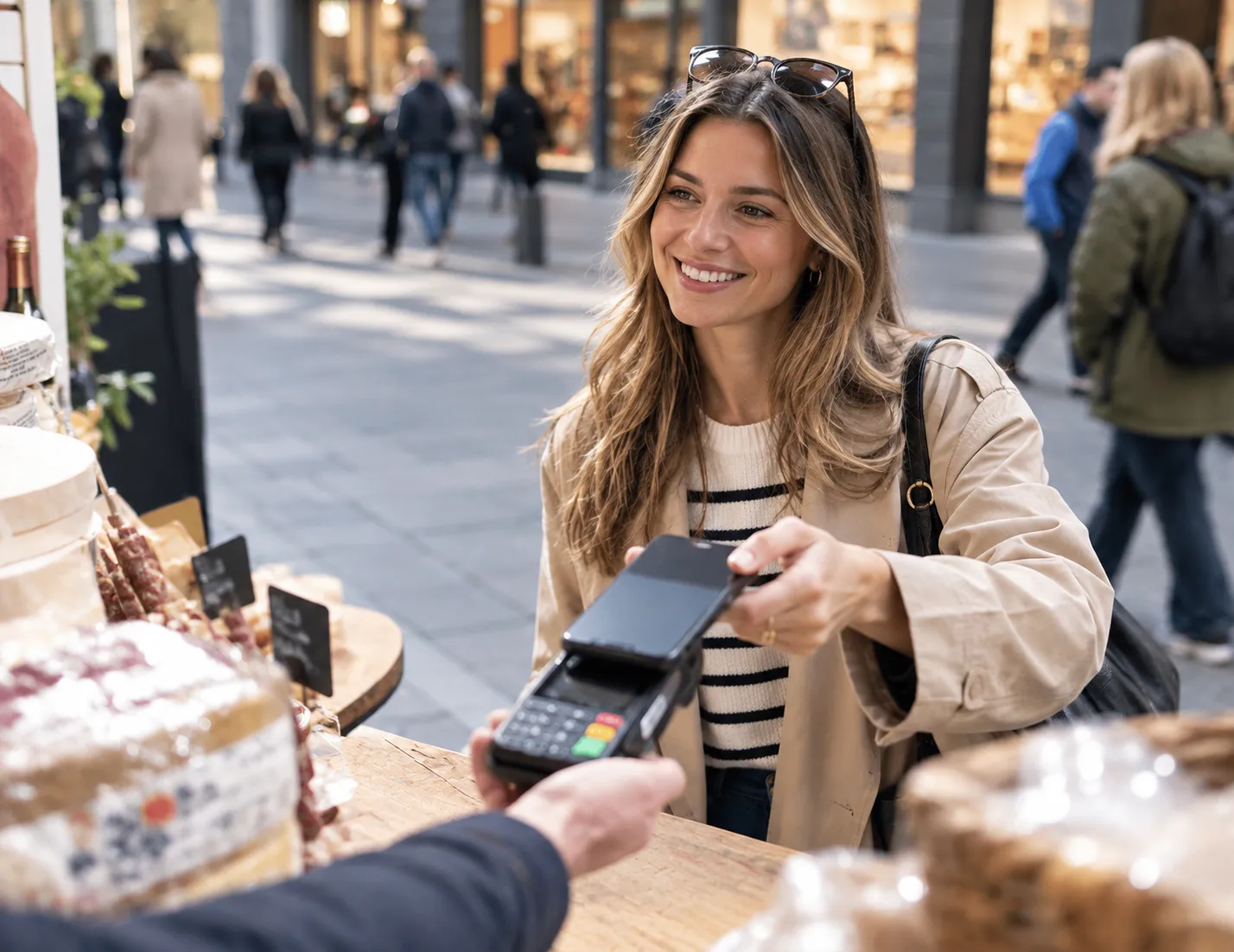
Cash is not gone, but in the UK it has become a small minority of how people pay. Across the euro area it is still used for about half of in-person payments, though that share is falling too. If you sell to the public, the numbers tell you something practical: which payments you cannot afford to turn away, and where the cost of accepting them is worth watching. These are the latest figures from UK Finance and the European Central Bank, and what they mean for a small business.
The short version
- In the UK, cash was used for 8% of all payments in 2025, down from 17% in 2020 and 45% in 2015. UK Finance expects it to fall to about 4% by 2035.
- Cards were used for 64% of UK payments, and debit cards alone for 54%. Contactless accounted for 39% of all payments.
- In the euro area, cash was still used for 52% of in-person payments by number in 2024 (down from 59% in 2022), but only 39% by value.
- For a UK business, not taking cards means turning away most customers. For most businesses, the question is no longer whether to accept cards, but what it costs to do so.
How the UK pays
UK Finance's latest UK Payment Markets report, published in August 2026 and covering 2025, counted 49.7 billion payments in the UK, excluding high-value CHAPS payments. Of those:
- Debit cards: 26.6 billion payments, 54% of the total.
- All card payments: 64% of the total.
- Contactless (cards, phones and watches): 19.2 billion payments, 39% of the total, up from 27% in 2020 and 3% in 2015. 62% of consumer debit card payments were contactless.
- Cash: 3.9 billion payments, 8% of the total, down from 4.3 billion in 2024.
- Mobile wallets: 37.6 million people were registered for one, and 58% of adults used mobile contactless at least once a month.
UK Finance also notes that card acceptance has grown "especially among smaller businesses", and that every bank-issued card terminal has accepted contactless since January 2020.
More UK figures, each with its source, are on our UK card payment statistics 2026 page.
How Europe pays
The European Central Bank's most recent study of how people in the euro area pay, published in December 2024, found:
- Cash at the point of sale: 52% of payments by number (59% in 2022) and 39% by value (42% in 2022).
- Cards at the point of sale: 45% of payments by value.
- Mobile app payments: 7% of point-of-sale value, up from 4% in 2022.
- Online: 21% of day-to-day payments by number, up from 17%, and 36% by value, up from 28%.
The gap between the UK and the euro area is wide, and cash use also varies a lot between euro-area countries. The direction is the same everywhere: cash down, cards and phones up, and more spending online. The euro area is also working on a digital euro, with the ECB aiming for a pilot in 2027, subject to the legislation being agreed.
What it means for a UK business
Accepting cards is not optional
With cash at 8% of payments, a business that does not take cards is turning away most of its potential customers, and many of those customers will not say so; they will just go elsewhere. That applies to market stalls and tradespeople as much as to shops. If you do not take cards yet, our sign-up form is the quickest way to get a quote, and our guide to how much a card machine costs explains the options.
Contactless and phones should just work
Nearly four in ten UK payments are contactless, and a growing share are made with phones and watches. Any modern terminal handles all of these, but it is worth checking that yours accepts Apple Pay and Google Pay, and that staff are comfortable with the occasional payment over £100 that needs a PIN.
Online and in-person are converging
Across Europe, online spending is growing fastest. For a small business that can mean taking deposits by payment link, selling vouchers or stock online, or taking card payments over the phone. Having all of those through one provider, with one statement, makes reconciliation far easier. Our online payments page covers payment links and e-commerce.
The cost of acceptance matters more
When most of your takings come by card, the fees on those payments become one of your larger overheads. The headline rate is rarely the full cost: authorisation fees, terminal rental, minimum charges and PCI fees all sit on top. Foreign cards, including those from euro-area visitors, usually cost more to process than UK debit cards, which matters if you serve tourists. Our guide to card machine fees explains each line, and the free card fee check works out your real cost from one statement in about a minute.
Questions people ask
What percentage of UK payments are made in cash?
8% in 2025, according to UK Finance's UK Payment Markets 2026 report, down from 17% in 2020 and 45% in 2015. UK Finance forecasts about 4% by 2035.
What percentage of UK payments are contactless?
39% of all UK payments in 2025 were contactless, according to UK Finance, including payments by card, phone and watch.
Is cash still common in Europe?
In the euro area, cash was used for 52% of in-person payments by number in 2024, according to the European Central Bank, but only 39% by value. Its share is falling, and use varies widely between countries.
Do I have to accept cash in the UK?
No. There is no general legal requirement for a shop to accept cash, though going card-only can exclude some customers. Many small businesses accept both.