


Contactless limit UK 2026: the £100 cap, Apple Pay and what changed
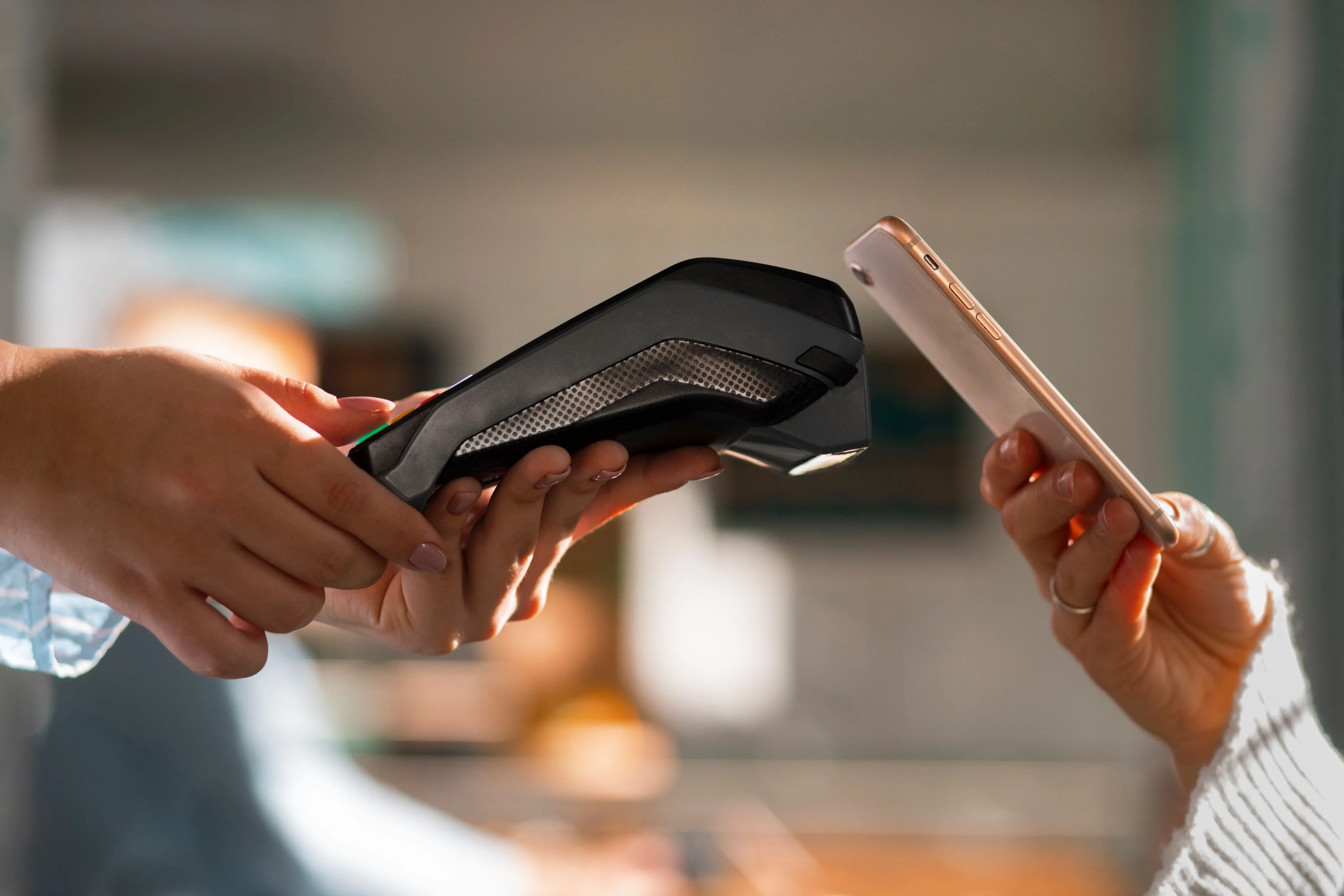
The UK no longer has a legal cap on contactless card payments. Since 19 March 2026, banks with strong fraud controls can set their own limit. In practice almost nothing has changed at the till: the big banks have kept £100 for now, and Apple Pay and Google Pay never had a fixed limit in the first place. This guide explains the current rules for shoppers and what they mean for a business taking payments.
The short version
- Contactless cards: the limit is still £100 per payment at every major UK bank. The FCA removed the fixed cap on 19 March 2026, but Barclays, HSBC, Lloyds, NatWest, Santander, Nationwide and Monzo have all said they are keeping £100 for now.
- Apple Pay and Google Pay: no fixed limit. Your phone or watch checks it is you with Face ID, a fingerprint or a passcode, so higher payments are allowed. Some shops' card machines still stop at £100.
- Occasional PIN checks: after a run of contactless payments, your bank will ask for your PIN. Under the old rules this happened after £300 in total or five payments in a row.
- For businesses: nothing has to change. Make sure your card machine is on current software and supports PIN entry, and that it does not apply an outdated £100 cap to phone and watch payments.
How the contactless limit has changed
The UK limit has risen five times since contactless cards arrived:
- £10 when contactless launched in 2007
- £20 in 2012
- £30 in 2015
- £45 in April 2020, raised during the pandemic
- £100 from 15 October 2021
Then on 19 March 2026 the Financial Conduct Authority (FCA) removed the fixed limit altogether. Card issuers with strong fraud controls can now choose their own limit, or no limit. The FCA also encouraged banks to let customers set a lower personal limit or switch contactless off.
What the March 2026 change actually did
The FCA did not raise the limit. It stopped setting one. Each bank now decides for itself, and has to explain any change clearly to its customers.
So far the banks have chosen to stay put. When the rule took effect, Barclays, HSBC, Lloyds, NatWest, Santander, Nationwide and Monzo all said they would keep £100 for now. The FCA itself expected most firms to keep their existing limits for the foreseeable future.
There are two reasons the limit has held. Fraud on contactless is low, at around 1.3p for every £100 spent according to the FCA, and banks are wary of raising it. UK Finance has also pointed out that card machines and the industry rules behind them were built around £100, so going higher means changing terminals as well.
The consumer protections have not changed. If a card is lost or stolen and used without permission, the bank still has to refund the customer.
Is there a limit on Apple Pay and Google Pay?
No, not a fixed one. UK Finance confirms that mobile payments "will continue to operate without a fixed £100 limit". Higher payments are allowed because the phone verifies the customer every time, with Face ID, a fingerprint or a passcode, whatever the amount.
That is why a customer can tap a phone for £250 when their card would ask for a PIN. Monzo, for example, says there is no limit on Apple Pay payments with its cards.
There is one catch. Some shops' card machines apply the £100 contactless limit to every tap, including phones and watches, and decline anything higher. That is a setting on the shop's side, not the customer's bank. If a customer's Apple Pay is refused at £120 but works at £90, that is usually the reason.
Why you get asked for your PIN
Every so often a contactless card payment will ask for your PIN, even for a coffee. That is a background safety check, not an error. Banks count your recent contactless spending and ask for the PIN when it passes a threshold. Before March 2026 the rules set this at £300 in total or five contactless payments in a row. Banks can now set their own thresholds, but the same idea applies.
Phone and watch payments do not trigger this, because each one is already verified on the device.
What it means for your business
You do not have to do anything because of the rule change. A few checks will make sure customers are not turned away:
- Keep your card machine's software up to date. Current software follows each card's own limit instead of an old hard-coded one.
- Check phone and watch payments work above £100. Try one. If your terminal declines a £150 Apple Pay payment, ask your provider to check its contactless settings.
- Make sure chip and PIN works smoothly. Any card payment over £100, and any card that asks for its PIN, needs the customer to insert the card or enter the PIN. Tap to Pay on iPhone and some Android apps support PIN entry on the phone screen.
- Ask your provider about blanket limits. Some acquirers set their own transaction limits, which can stop a higher contactless payment even when the card would allow it.
Contactless payments cost the same as chip and PIN payments on the same type of card, so a higher limit does not change your fees. If you want to know what you are paying in fees, our card fee calculator works out your effective rate, and our free card fee check reads a statement for you.
For more on taking payments on a phone, see our guide to Tap to Pay on iPhone and Android.
How we can help
Pulsare Pay supplies countertop, portable and 4G card machines that take contactless, chip and PIN, Apple Pay and Google Pay. If your current terminal is declining phone payments over £100, or you are not sure how it is set up, call us on 020 3916 6243 or get a quote.
Questions people ask
What is the contactless limit in the UK in 2026?
There is no longer a legal limit. Since 19 March 2026 each bank sets its own. All the major UK banks have kept £100 for now, so in practice the limit for a contactless card is still £100.
Is there a limit on Apple Pay in the UK?
There is no fixed limit on Apple Pay or Google Pay, because your phone verifies you on every payment. Some shops' card machines still stop phone payments at £100, which is a setting on the shop's side.
Why was my contactless payment declined under £100?
Usually because your bank wanted a PIN check after a run of contactless payments. Insert the card and enter your PIN, and the next contactless payment will work.
Can I set my own contactless limit?
Many banks let you set a lower limit or switch contactless off in their app. The FCA has encouraged all card providers to offer this.
Will the contactless limit go up?
It can now, without a change in the law, but no major bank has raised it yet. Any bank that does has to tell its customers clearly first.
Do shops pay more for contactless payments?
No. A contactless payment is charged at the same rate as a chip and PIN payment on the same type of card.
Sources
- FCA: greater flexibility to be given for setting future contactless limits (19 December 2025)
- FCA: proposed contactless changes could increase convenience for consumers (September 2025)
- UK Finance: contactless cards information
- FStech: FCA contactless limit removal takes effect (19 March 2026)
- Credit Strategy: banks prepare for contactless threshold changes from 19 March (18 March 2026)
- FinTech Futures: UK contactless payment limit rises from £45 to £100
- Monzo: Apple Pay payment limit